
Sitework Construction Software That Keeps Ground Operations Running
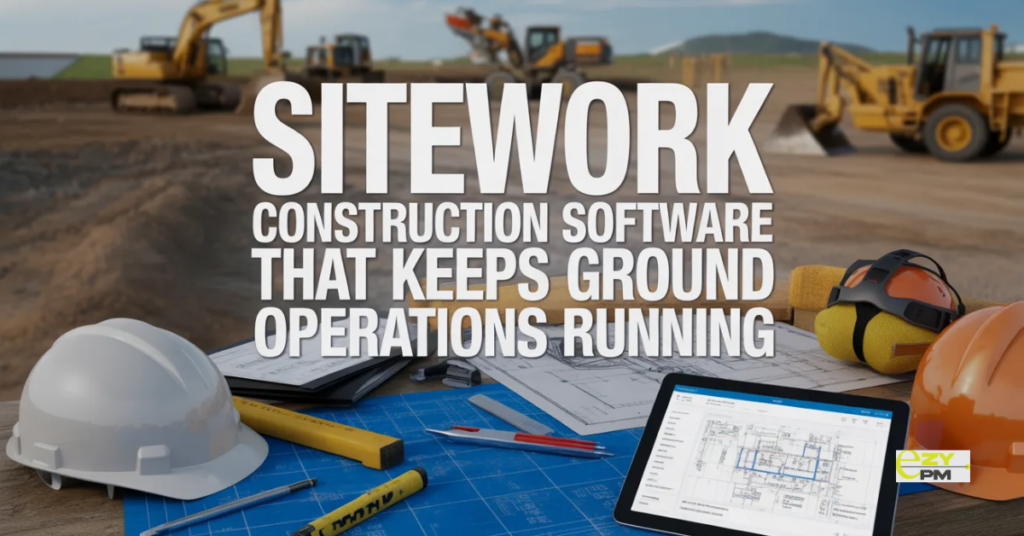
- Sitework is where construction projects begin and where many of the most significant programmed and cost risks sit. Earthworks that run over because the ground conditions were not what the survey suggested. Drainage installation that falls behind because material deliveries were not coordinated with the excavation programmed. Utilities that conflict with the design because the as-built survey was not accurate. These problems are not rare. They are the normal features of construction projects that lack proper sitework planning and management.
- Sitework construction software addresses the planning, coordination and tracking challenges that ground operations present. Not by making sitework simpler than it is but by giving the people managing it the visibility and information they need to stay ahead of problems rather than constantly responding to them.
What Makes Sitework Different
- Sitework has characteristics that make managing it different from managing above ground construction in ways that matter for the tools chosen to support it.
- Ground conditions are variable and often different from what the survey predicted. What was planned based on desk study and investigation may not reflect what the excavator encounters. Changes in material classification, unexpected services and varying water table levels all create programme and cost implications that need to be captured and managed as they arise rather than accumulated and disputed at final account.
- Volume management is a central sitework challenge. Cut and fill calculations that determine how much material needs to move and where. The balance between material that can be reused on site and material that needs to be removed or imported. Haulage planning that minimises double handling. These calculations are complex and the decisions they inform have significant cost implications.
- Sequencing of ground operations affects everything that follows. Foundation construction that cannot start until earthworks are complete. Services installation that needs to happen in a specific sequence. Drainage that needs to be in place before surfacing can begin. The dependencies in sitework are physical and strict in ways that affect the whole project programme when they are not properly managed.
- Weather affects sitework in ways that affect other construction activities less directly. Ground that becomes unworkable after rain. Earthworks that need to be protected from frost. Concrete pours that are weather sensitive. A sitework programme that does not account for weather risk carries schedule optimism that turns into programme delay.
What Sitework Management Actually Involves
- Sitework construction software serves the management of several distinct but connected activities that together constitute the ground operations on a construction project.
- Earthworks planning and tracking. The volumes to be moved. The cut and fill balance. The material classification that determines disposal and import requirements. The daily tracking of what has actually moved against what was planned. The management of haulage routes and vehicle movements that affect both programme and site safety.
- Services coordination. The location of existing services that must be protected or diverted. The installation of new services in the correct sequence. The coordination between different services trades that are working in adjacent areas simultaneously. The as-built records that capture where services were actually installed rather than where they were designed to go.
- Drainage and groundworks management. Drainage installation sequenced against the earthworks programme. Inspection chambers and manholes installed at the right stages. Drainage testing and sign-off before subsequent operations cover the installed work. The records that demonstrate compliance with design and regulatory requirements.
- Site establishment and logistics. Temporary access routes that serve the programme. Compound locations that do not conflict with the permanent works. Plant and equipment movements that are coordinated rather than reactive. Material deliveries that arrive when the work is ready for them rather than creating storage problems on a congested site.
- Compliance and environmental management. Erosion and sediment control that prevents discharge to watercourses. Dust suppression during dry weather earthworks. Noise monitoring during sensitive operations. The records that demonstrate compliance with planning conditions and environmental permits.
The Programmed Challenge in Sitework
- Programme management on sitework is more complex than programme management on above ground construction for reasons that reflect the specific characteristics of ground operations.
- The work is exposed to weather in ways that above ground construction is not once the structure is watertight. Weather events that would not affect frame or fit out operations can stop sitework entirely. A programme that does not include weather allowance for ground operations will consistently slip in wet conditions.
- The sequence of sitework activities affects the whole project programme more directly than many teams recognise at the outset. Earthworks that run over delay foundation construction. Foundation delays push back the frame. Frame delays affect the whole build programme. The critical path on many construction projects runs through the sitework phase and delays in ground operations have amplified effects on overall programme that are only obvious after they have occurred.
- Machine productivity on earthworks varies significantly with ground conditions, machine selection and operator skill. Productivity assumptions that were based on ideal conditions underestimate the duration of earthworks in difficult ground. Sitework construction software that tracks actual productivity against planned productivity provides early warning of programmed risk that allows response before the delay has become unrecoverable.
Volume Management and Cost Control
- The financial management of sitework is dominated by volume. How much material was moved. Where it came from and where it went. Whether it matched what was estimated. These are the questions that determine whether sitework stays within budget or produces the cost overruns that affect project profitability.
- Volume tracking that happens in real time rather than through periodic reconciliation keeps the financial position current. Daily records of what was excavated, what was placed and what was removed allow comparison against the programme that identifies divergence before it accumulates into a significant overrun.
- Material classification matters because different classifications carry different cost implications. Material that was expected to be class A ends up being class B or unacceptable. Material that was expected to be reusable cannot be placed. These reclassifications create cost events that need to be captured as they are identified rather than at monthly valuation.
- Haulage cost management is where sitework financial control most often falls short. Vehicle movements that are not tracked. Loads that are not counted. Haulage distances that are longer than planned. These individually small costs accumulate into significant untracked expenditure on major earthworks operations.
What Good Sitework Software Does
- The capabilities that matter most in sitework construction software reflect the specific management requirements of ground operations rather than general project management requirements that happen to be applied to sitework.
- Volume tracking and reporting. The ability to record daily production, calculate cumulative volumes and compare against programmes and estimate. The reporting that gives the project manager and the commercial team the current picture without requiring manual data assembly from site records.
- Programme management with weather allowance. Scheduling tools that account for the weather risk in outdoor ground operations. Float that is distributed to the activities most exposed to weather rather than applied uniformly. Programme updates that reflect actual production rather than assumed production.
- Plant and equipment management. Tracking what plant is on site, where it is deployed and what it is producing. Utilisation data that reveals whether plant allocation matches the programme requirements or whether adjustments are needed.
- Daily site records. The contemporary records of what was done each day form the basis of both programme tracking and commercial management. Records that are captured electronically in real time rather than being written on paper and transferred later.
- Services and utilities management. The location of existing services. The as-built records of installed services. The coordination between different services trades to prevent conflicts.
- Environmental and compliance records. The evidence that environmental conditions and planning requirements are being met. Monitoring records that demonstrate compliance rather than relying on assertion.
Integration With the Broader Project
- Sitework construction software that sits in isolation from the broader project management environment creates gaps that undermine its value in specific ways.
- Sitework programme delays that are not reflected in the overall project programme mean programme management decisions above ground are being made without accurate information about when the ground operations will be complete. The knock on effects of sitework delay on the whole project programme are not visible until the sitework has already fallen behind.
- Sitework cost overruns that are not connected to the project financial management system mean the project financial position is understated during the sitework phase. The commercial team is reporting against a budget that does not reflect what has actually been committed in ground operations.
- Good sitework software connects to the project programme and the project financial management in ways that keep the overall project management picture current rather than requiring manual reconciliation between separate systems.
- EZY PMP is a platform built for construction businesses that want their sitework management connected to their overall project management rather than operating as a separate function. Connecting the ground operations tracking to project scheduling, financial management and document management in a way that keeps the full project picture current throughout the sitework phase.
Questions Worth Asking
How do we handle ground conditions that are significantly different from the survey predictions?
- Capture reclassification events as they are identified rather than at valuation. The contemporary record of what was encountered and when it was identified is what supports the commercial claim for the additional cost. A system that makes recording these events straightforward at the time they occur produces better records than one that relies on end of day or end of week reconciliation.
How do we track haulage volumes and costs without creating excessive administrative overhead?
- Integration between the volume tracking system and the haulage management is more effective than manual counting and reconciliation. Even simple electronic ticketing that captures vehicle movements and loads reduces the manual overhead and improves the accuracy of haulage cost management compared to paper based approaches.
How do we manage the programme impact of weather without building excessive float into every activity?
- Track weather events and their operational impact throughout the project rather than applying a blanket weather allowance at the start. The actual weather record provides the evidence for extension of time claims related to weather and informs more accurate weather allowance on future similar projects.
